Stress is a normal part of life. But when stress becomes chronic, it can affect more than how you feel emotionally, it can also show up physically.
You may notice tension building in your neck and shoulders, tightness in your back, changes in your posture, headaches, jaw tension, or simply a feeling that your body never quite relaxes.
While practices such as exercise, sleep, mindfulness, and other stress-management strategies can be helpful, hands-on care may also be a valuable part of a comprehensive approach to recovery and well-being.
At Karim Chiropractic & Acupuncture, I take an individualized approach to care that may include chiropractic adjustments, cupping therapy, acupuncture, nervous-system regulation strategies, and lifestyle or recovery guidance.
Let’s take a closer look at how stress can affect the body and how chiropractic care and cupping may support relaxation, movement, and recovery.
How Can Chiropractic Care and Cupping Therapy Support Stress Relief?
Stress affects everyone differently. For some people, it may show up as muscle tension. For others, it may contribute to headaches, jaw tension, poor sleep, or general physical discomfort.
Chiropractic care and cupping therapy don’t eliminate the sources of stress in your life, but they may be useful tools for addressing some of the physical tension and discomfort that can accompany it.
Supporting Muscle Relaxation
When we’re stressed, it’s common to unconsciously hold tension in certain areas of the body—particularly the neck, shoulders, upper back, and lower back.
Chiropractic care can be used to support joint movement and mobility, while cupping therapy may be incorporated to address areas of muscular tension and discomfort.
The goal isn’t simply to treat a particular muscle or joint. It’s to understand how you’re moving, where you’re holding tension, and what may help you feel more comfortable in your body.
Supporting Better Movement and Posture
The way we sit, work, exercise, and move throughout the day can influence how our bodies feel.
Stress may also cause us to change the way we carry ourselves. You may notice yourself rounding your shoulders, clenching your jaw, or becoming more rigid in your movement without even realizing it.
During an appointment, we can look at movement patterns and discuss strategies that may support better mobility and recovery.
Rather than focusing on achieving a “perfect” posture, I focus on helping patients understand how their bodies are moving and what may help them feel and function better.
Creating Space for Relaxation
One of the often-overlooked benefits of hands-on care is simply having time to slow down.
A 60-minute appointment provides an opportunity to step away from the demands of the day, focus on your body, and receive individualized care.
Depending on your needs, that may include chiropractic care, acupuncture, cupping, breathing or nervous-system regulation strategies, or simply a conversation about recovery and lifestyle.
The goal is not to use every treatment at every appointment. It’s to determine what makes sense for you.
Can Chiropractic Care Help With Stress-Related Neck and Back Tension?
Stress can contribute to muscle tension, particularly around the neck, shoulders, and back.
When combined with long periods of sitting, repetitive movements, demanding workouts, or poor recovery, that tension may contribute to physical discomfort.
Chiropractic care may help support joint mobility and movement, while complementary approaches such as cupping may be used to address areas of muscular tension.
For some patients, the combination can be a useful part of a broader approach to managing physical tension and supporting recovery.
How Can Cupping Therapy Fit Into an Integrative Approach?
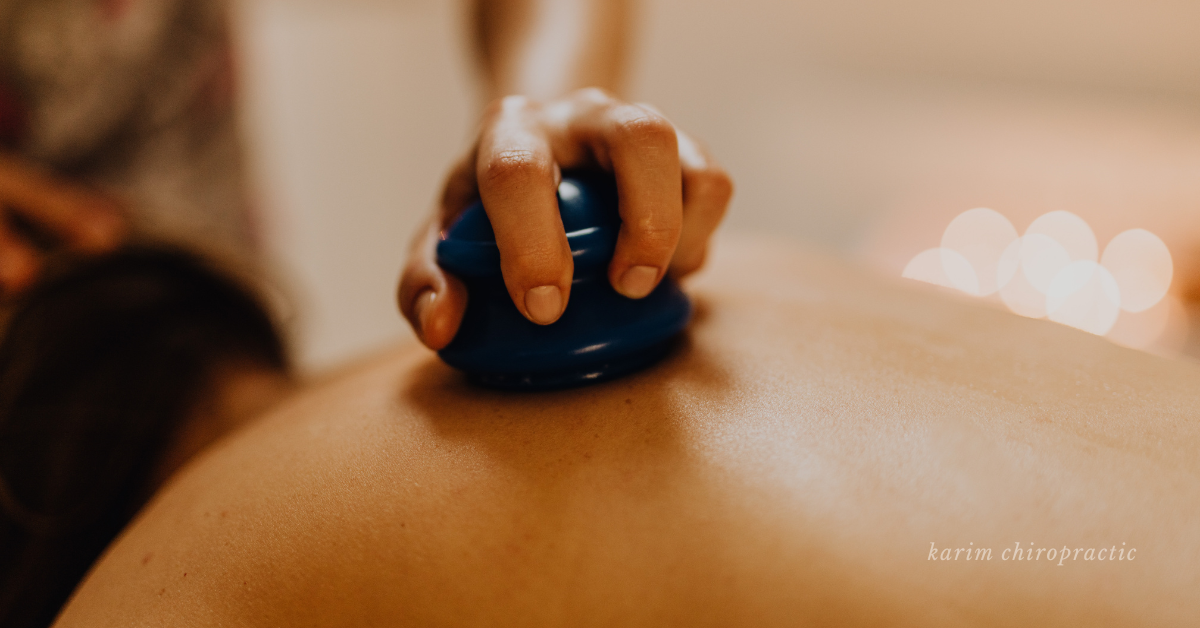
Cupping therapy is a technique that uses suction to create a lifting sensation on the skin and underlying tissues.
At Karim Chiropractic & Acupuncture, cupping may be incorporated into an appointment when it appears appropriate for the individual.
Some people seek cupping as part of their recovery routine, particularly when they experience muscle tightness or physical tension.
Cupping isn’t necessary for everyone, and it isn’t used simply because it’s available. As with all aspects of care, I consider the individual, their goals, and what may be most appropriate during that particular visit.
Where Can Stress Show Up in the Body?
Stress doesn’t always announce itself as “stress.”
Sometimes it appears as physical tension or discomfort in unexpected places.
Jaw and Face
Many people unconsciously clench their jaw when they’re stressed, particularly during periods of prolonged concentration or while sleeping.
This can contribute to tension around the jaw, face, neck, and shoulders.
If you’re experiencing persistent jaw pain or other symptoms, it’s important to discuss those concerns with an appropriate healthcare professional. Chiropractic care may be one component of a broader approach when appropriate.
Neck and Shoulders
The neck and shoulders are common areas where people hold tension.
Long hours at a computer, driving, exercise, and stress can all contribute to feelings of tightness and stiffness.
Individualized chiropractic care, movement strategies, and other supportive approaches may help you address these patterns.
Lower Back
Stress can contribute to increased muscle tension, while prolonged sitting, physical activity, and inadequate recovery can also influence how your lower back feels.
Rather than looking at stress in isolation, I prefer to consider the bigger picture—including movement, daily habits, exercise, sleep, and recovery.
Head and Headaches
Some people notice headaches or increased head and neck tension during periods of stress.
There can be many different causes of headaches, so persistent or severe headaches should always be evaluated appropriately.
When musculoskeletal tension appears to be a contributing factor, chiropractic care and other supportive strategies may be considered as part of an individualized approach.
Stress Management Is About More Than One Treatment
There is rarely one solution to stress.
Movement, exercise, quality sleep, nutrition, meaningful connection, time outdoors, breathing practices, and healthy boundaries can all play a role in supporting overall well-being.
Hands-on care can be another tool.
That’s why my approach at Karim Chiropractic & Acupuncture isn’t simply about performing an adjustment and sending you on your way.
I want to understand what is happening in your life and how your body is responding.
Your appointment may include chiropractic care, acupuncture, cupping therapy, nervous-system regulation strategies, or conversations about lifestyle and recovery—depending on what makes sense for you.
A More Comprehensive Approach to Care in Overland Park
If stress is showing up in your body as tension, stiffness, or discomfort, you don’t necessarily have to choose between addressing your physical symptoms and paying attention to the bigger picture.
At Karim Chiropractic & Acupuncture in Overland Park, I take the time to understand the individual rather than simply treating a symptom.
Every appointment is scheduled for 60 minutes, giving us the opportunity to slow down, assess what’s going on, provide individualized care, and discuss strategies that may support you between visits.
Your body and your life are connected. Your care should reflect that.
If you’re interested in learning whether chiropractic care, acupuncture, cupping therapy, or another approach may be appropriate for you, contact Karim Chiropractic & Acupuncture to schedule a visit.